
Official Charlotte County Arrest News
Start with the CCSO Blog. Sheriff announcements appear there first. The feed mixes selected arrests with wanted notices, capture updates, traffic messages, and agency news. The Sheriff's Office also posts through Facebook, X, and YouTube. Reporters watch these channels closely, so an arrest often surfaces there before anywhere else. The limits matter, though. None of these outlets is a full Charlotte County booking log, and none stands in for the jail database or the court docket.
Punta Gorda has its own outlet. PGPD News plays the same official-release role for city police events, backed by social accounts plus a Daily Reports and Event Search. That tool's time window, fields, refresh schedule, and photo behavior remain unclear. Here is one wrinkle worth knowing. PGPD arrests are generally processed at Charlotte County Jail, so a city post and a county booking entry can appear at different times.
Agency narratives rest on whatever information existed near the incident. A prosecutor may file different counts, decline a count, or amend the case later. The Charlotte Clerk record tracks that process from there.
Charlotte County News Outlets
Local reporting follows two patterns. The Charlotte Sun runs a recurring police-beat format built on agency reports. Television and digital outlets take the other path, picking individual stories with wider public interest. Neither pattern covers every arrest. Photo use also shifts from article to article.
| Outlet | Charlotte coverage | Photos and source | Where to look |
|---|---|---|---|
| Charlotte Sun / YourSun | Recurring Police Beat items across Charlotte County and Punta Gorda | Print examples are mainly text lists attributed to agencies, not a standing mugshot gallery | YourSun |
| Gulf Coast News Now | Selected Southwest Florida arrest, investigation, and sentencing stories | Some Charlotte stories use CCSO-supplied facts and images | Gulf Coast News Now |
| WINK News | Episodic Charlotte and Punta Gorda crime reports | Varies by story; no dedicated Charlotte booking section was verified | WINK News |
| Fox 4 Southwest Florida | Selected regional public-safety and arrest stories | Varies by report and agency source | Fox 4 |
The Daily Sun and Charlotte Sun both run a recurring "Police Beat" column. Entries may list a name, age, partial address, charge, and bond. CCSO attribution is usually clear. The column appears often, though not every day. Gulf Coast News Now, WINK, and Fox 4 pick far fewer events. When court or sentencing news develops later, they sometimes reuse an older agency image.
Hoodline sometimes republishes sheriff narratives. It may compare private sources too. Its Charlotte material stays episodic, though, and it is not a roster. News judgment drives the pattern. One arrest earns a full story while another lives only in an official record.
Charlotte County News Photo Sources
How does a booking photo reach a newsroom? Three routes exist. An agency may release it proactively. A reporter may request it under public-records law. Or a publisher may pull it from an official booking source. Florida's public-records baseline does not make every image fair game, though. Exemptions, confidentiality, sealing, expunction, juvenile protections, and the agency's custody of the record all shape access.
Attribution offers a useful clue. A credit like "Courtesy CCSO" points back to the agency that supplied the image. A story image can outlive the status it first described. Release from jail, a later filing decision, and final disposition do not automatically rewrite archived articles. So keep dates and source credits attached whenever an older story resurfaces.
One example shows the pattern. The Gulf Coast News Now Punta Gorda arrest story is an episodic report crediting CCSO, not a complete booking feed.
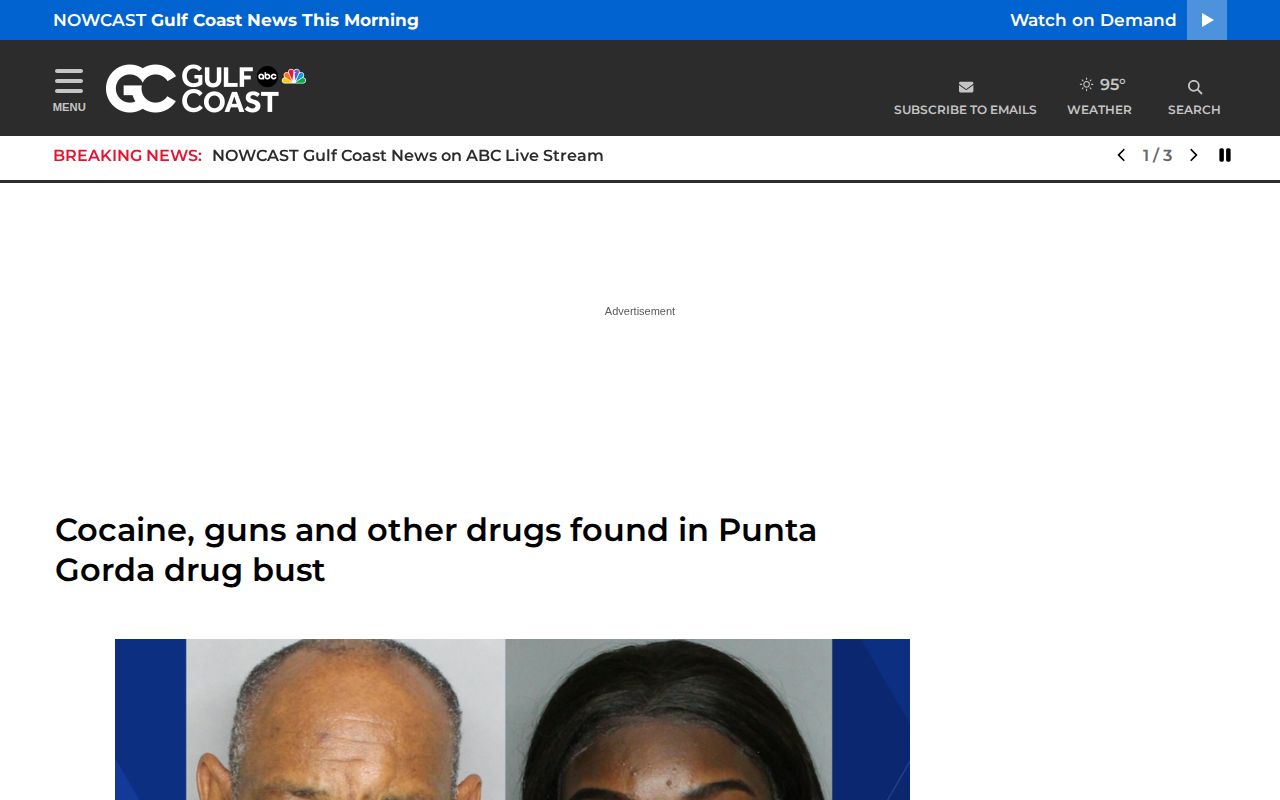
The screenshot captures how one newsroom covered a single case. Treat any status claim in that article with care. News stories can lag behind the records. Before repeating details, confirm them against current CCSO records and the Charlotte County Clerk of Court.
Charlotte County Arrest Feed Limits
Charlotte County publishes no verified official pages for the last 24, 48, or 72 hours, nor a weekly jail blotter. The official route is the CCSO Local Arrest Database. Its exact output fields, image behavior, update time, and archive span could not be confirmed through the protected embedded interface. The Charlotte County Sheriff app also advertises recent arrests. Its launch notice defines no time window. It promises no photos.
That gap shapes the local news landscape. A reporter may see an agency release before a booking interface updates. A booking can also sit in the system with no story at all. PGPD's Daily Reports and Event Search, for its part, is a city event and report tool rather than a proved county jail feed. For a missing or older item, a focused CCSO records request is the official fallback. The Clerk case search sits close behind for court action.
| What appeared | What it can establish | Next official check |
|---|---|---|
| Agency news post | The agency's account of a selected event at publication time | Local Arrest Database and Clerk docket |
| Jail booking entry | A processed county custody event | CCSO record request and court case |
| News article | Editorial reporting based on named or unnamed sources | Original agency source and Clerk disposition |
| Unofficial mirror | A publisher's copy or compilation that may lag | CCSO, PGPD when relevant, and the Clerk |
Unofficial Charlotte County Mugshot Sites
Private mugshot publishers and jail directories rank after the official channels for a reason. Their records can be stale, incomplete, mismatched, or detached from later court action. They may help you pin down a date or name worth verifying. None of them is the authority on present custody or how a case ended.
- Busted Newspaper Charlotte County offers a paginated card feed with booking details. Its pages suggest rolling ingestion, but no guaranteed update cadence was established.
- RecentlyBooked Charlotte County says its page covers the last 30 days, refreshes several times daily, and shows a last-updated label. Those are the publisher's claims, not CCSO policy.
- Mugshots.com Charlotte County has name and year navigation. The reviewed year filters made it look more archival than live.
- Arrests.org Charlotte County presents date controls and derived record cards, but it disclaims accuracy and has no verified official update schedule.
- Mugshots.zone Charlotte County has dated cards and month archives extending to 2021. Recent presence during research was not a contractual daily promise.
A couple of these sites call for real care. JailExchange makes money as a directory. It will point you toward official sources, sure, but it also posts its own figures and claims, and those deserve a raised eyebrow rather than full trust. Then there is CharlotteCountyCourt.us. The name sounds official. It is not. No connection to the Charlotte Clerk exists, so read nothing there as county policy or a reliable jail statistic.
Trace Charlotte County Arrest Stories
A news story opens a question rather than closing one. Tracing a Charlotte County arrest takes three moves. Begin with the publisher's own source attribution. Move on to county custody records. Then pull up the court case tied to the name.
- Record the person's full name, the incident or publication date, the agency named in the story, and any case or booking number.
- Find the original CCSO Blog or PGPD News release when the article cites one. Compare wording and publication dates.
- Check the CCSO Local Arrest Database for a county booking. A current result concerns custody, not guilt.
- Use the Charlotte Clerk Court Search by name, case number, or citation number. Match identity and filing dates carefully.
- Read the later docket for amended counts, dismissal, nolle prosequi, plea, trial result, adjudication, or sentence. Order a certified disposition when a definitive outcome is needed.
Expect gaps at every step. A court case may not show up yet because filings often lag behind the news cycle. A jail result can vanish for several reasons. The person may have been released. The search window may have shifted. Or the record may need a formal request to surface. The county-wide Charlotte County busted mugshot and booking path covers those custody channels in full.
Charlotte County Mugshot Timeline
Think of Charlotte County crime news as a chain with three links: police action, jail custody, and the court outcome. The first link is the street-level arrest. After that comes booking at the jail. Per CCSO's jail handout, county arrestees generally go to Charlotte County Jail for processing and first appearance, with a few listed exceptions. Florida procedure puts a lawfully detained person in front of a judicial officer within 24 hours. That hearing covers rights, counsel, communication, and release conditions.
The Clerk criminal division takes over the paperwork from there. Felony, misdemeanor, criminal traffic, and ordinance cases all land in that office. Counts filed can differ from the booking charges. Later dockets may show amendment, dismissal, plea, trial result, adjudication, or sentence. So hold the news image, the booking entry, and the court result apart in your mind. Each answers a different question about the same case.
- Police charge
- The agency account of suspected conduct, often reflected in an initial release or report.
- Booking
- The Charlotte County Jail intake event after arrest, including custody processing.
- First appearance
- The prompt initial hearing for a person who remains detained.
- Disposition
- The official court outcome for a filed charge or case.
Punta Gorda stands alone in one respect: it runs the county's only incorporated-city police department. City-specific coverage can start with PGPD. The booking itself still flows into county systems. The Punta Gorda busted mugshots page follows that municipal-to-county path. Port Charlotte, Englewood, Rotonda, and other familiar communities lack city incorporation. Their arrests fall mainly under CCSO reporting, not separate city police pages.
Note: Keep the article date, booking date, and docket date distinct, since each marks a different stage of the same case.